Surviving family members of Aylan Kurdi have revealed how the Syrian three-year-old came to be washed up dead on a beach in Turkey on Wednesday morning. Aylan's distraught father, Abdullah Kurdi, tried and failed to hold on to his wife and two sons after their boat to the Greek island of Kos capsized. He has reportedly now said his only wish is to return their bodies to their home town of Kobani and then “be buried alongside them”.
The family had been making the treacherous journey across Turkey to Europe in the hope of joining Abdullah’s sister, Teema Kurdi, a hairdresser who has lived in Vancouver, Canada for more than 20 years. The Independent has taken the decision to publish the image, which some may find offensive, lower down in this article because among the often glib words about the "ongoing migrant crisis", it is all too easy to forget the reality of the desperate situation facing many refugees.
Speaking to the National Post’s Terry Glavin, Ms Kurdi said she had learned of Aylan’s death, as well as that of his brother Galip and mother Rihan, at 5am on Wednesday morning. The images of Aylan emerged in Turkish media at around midday, and have since sparked international outrage over the refugee crisis.
Glavin told BBC Radio 5 live on Thursday that Ms Kurdi had heard from family members about Abdullah’s desperate battle to save his family in the sea. "There's a terrible story he told about swimming from one to the other, finding one [son] who seemed to be alright and then going to another, finding him drowned... and then going back to the first boy and finding him drowned,” he said. “He made it, but his wife didn’t.”

A young Syrian boy, who drowned in his family’s attempt to reach Greece from Turkey, lies in the surf near Bodrum, Turkey (Reuters).
Jenan Moussa, a journalist with Dubai’s Al Aan TV, said she had confirmed with sources in Kobani that the Kurdish family hailed from the recently-embattled Syrian city. She said Abdullah was a barber originally from Damascus, who fled from Kobani to Turkey but “dreamed of a future in Canada” for his family. “Abdullah paid €4000 (£2900) for his family to get on a 5m-long dinghy from Bodrum to Greece. He borrowed money. This was not their first attempt to get to Greece.”
„When in the dinghy, the sea got rough. Turkish smuggler abandoned boat, left passengers struggling. Boat capsized after one hour.“
According to Turkey's state-run Anadolu news agency, police have detained four suspected human traffickers one day after the three members of the Kurdi family and nine other refugees died in the short Aegean straight between Turkey and Kos. Officers said the men were detained on a beach on Turkey’s Bodrum peninsula and, according to Anadolu, they were suspected of acting as intermediaries
Príbeh Aylana Kurdího: migrantmi vyplavené dieťa a globálne ohlasy na utečeneckú krízu
Surviving family members of Aylan Kurdi have revealed how the Syrian three-year-old came to be washed up dead on a beach in Turkey on Wednesday morning. Aylan's distraught father, Abdullah Kurdi, tried and failed to hold on to his wife and two sons after their boat to the Greek island of Kos capsized. He has reportedly now said his only wish is to return their bodies to their home town of Kobani and then “be buried alongside them”.
The family had been making the treacherous journey across Turkey to Europe in the hope of joining Abdullah’s sister, Teema Kurdi, a hairdresser who has lived in Vancouver, Canada for more than 20 years. The Independent has taken the decision to publish the image, which some may find offensive, lower down in this article because among the often glib words about the "ongoing migrant crisis", it is all too easy to forget the reality of the desperate situation facing many refugees.
Speaking to the National Post’s Terry Glavin, Ms Kurdi said she had learned of Aylan’s death, as well as that of his brother Galip and mother Rihan, at 5am on Wednesday morning. The images of Aylan emerged in Turkish media at around midday, and have since sparked international outrage over the refugee crisis.
Glavin told BBC Radio 5 live on Thursday that Ms Kurdi had heard from family members about Abdullah’s desperate battle to save his family in the sea. “There's a terrible story he told about swimming from one to the other, finding one [son] who seemed to be alright and then going to another, finding him drowned... and then going back to the first boy and finding him drowned,” he said. “He made it, but his wife didn’t.”
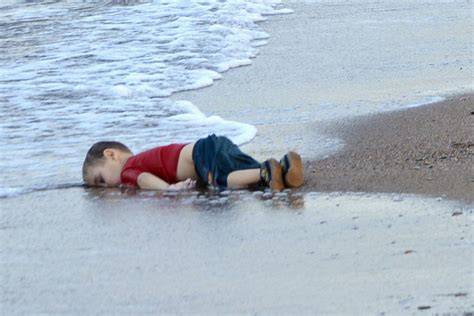
A young Syrian boy, who drowned in his family’s attempt to reach Greece from Turkey, lies in the surf near Bodrum, Turkey (Reuters). Jenan Moussa, a journalist with Dubai’s Al Aan TV, said she had confirmed with sources in Kobani that the Kurdish family hailed from the recently-embattled Syrian city. She said Abdullah was a barber originally from Damascus, who fled from Kobani to Turkey but “dreamed of a future in Canada” for his family. “Abdullah paid €4000 (£2900) for his family to get on a 5m-long dinghy from Bodrum to Greece. He borrowed money. This was not their first attempt to get to Greece.”
According to Turkey's state-run Anadolu news agency, police have detained four suspected human traffickers one day after the three members of the Kurdi family and nine other refugees died in the short Aegean straight between Turkey and Kos. Officers said the men were detained on a beach on Turkey’s Bodrum peninsula and, according to Anadolu, they were suspected of acting as intermediaries for illegal crossings. Three other children drowned in the same crossings as Aylan and his family, while seven people were rescued and two reached the shore in life jackets. Thousands are making the same journey from Turkey to Greece’s easternmost islands each day. It is considered one of the safest routes to Europe and beyond. The majority are from Syria though some have also fled Afghanistan and Iraq.
V kauze smrti malého sýrskeho utečenca Aylana Kurdího, ktorého telo po potopení lode počas cesty do Grécka vyplavilo more na pláž v Turecku, sa objavili nové dohady odporujúce verzii udalostí zverejnenej jeho otcom. Médiá sa skontaktovali s najmenej tromi ľuďmi, ktorí boli na lodi a tvrdia, že otec malého Aylana patril k pašerákom ľudí a bol to on, kto loď smerujúcu do Grécka kormidloval. Iračanka Zajnab Abbás vyhlásila, že Kurdího utečencovi predstavil sýrsky prevádzač ako kormidelníka člna. Prevádzač ešte pochybujúcu Iračanku presviedčal, aby do člna nastúpila, lebo na trasu sa vydáva aj rodina lodivoda. Abdalláh Kurdí začal loď kormidlovať; „Zbláznil sa,“ cituje ženu Express. Jej manžel Kurdího bezúspešne žiadal, aby loď spomalil. Práve vtedy sa ale začala potápať. Abbás dodala, že v lodi nebolo dosť záchranných viest.
- Podľa kurdského prípadu sa objavili obvinenia, že Abdullah riadil loď a pašerák ľudí sa vzdialil, čo on odmieta tvrdením, že kormidelník skákal cez palubu a ľudí nechal napospas osudu.
- Obvinenia zo strany irackých svedkov boli vyvrátené, pričom viacerí potvrdili inú verziu udalostí a opisovali paniku na palube a zlyhanie motoru.
- Fotografie tela Aylana vyvolali medzinárodnú posunu pohľadov na utečeneckú krízu a vyvolali množstvo reakcií na politiku vstupu migrantov.
Symbol utečeneckej krízy: Prípad Kurdího rodiny sa dostal do pozornosti svetovej verejnosti po tom, čo mnohé denníky a spravodajské portály zverejnili fotografie bezvládneho tela trojročného syna Aylana, ktoré v stredu 2. septembra vyplavilo more na turecké pobrežie. Alan Kurdi (narodený ako Alan Shenu) bol dvojročný Sýrčan patriaci ku kurdskému etniku, jeho obraz sa stal globálnym titulkom po tom, čo sa utopil 2. septembra 2015 v Stredozemnom mori spolu s matkou a bratom. Rodina sa snažila dostať do Európy z Turecka, keďže sa snažili pripojiť k rodine v Kanade.
Podľa inštitúcií a médií sa rodina často snažila o vstup do Kanady prostredníctvom programu súkromného sponzorstva. Aylanov otec Abdullah popiera obvinenia, že by bol pašerákmi ľudí; údajne tvrdí, že vodič lode opustil loď a že on sám bojoval o záchranu rodiny do poslednej chvíle. Niektorí svedkovia uvádzajú, že kapitán lode zlyhal a že loď bola preťažená. Fotografia tela vyvolala globálny tlak na účinnejšie a humánnejšie riešenie migračnej krízy a podnietila medzinárodnú debatu o pasívnych a aktívnych opatreniach na ochranu utečencov.

V roku 2015 dizajnéri, novinári a umelci reagovali na túto tragédiu cez rôzne formy ako sú diela a pamätné podujatia po celom svete. Kritický pohľad na politiku a zlyhanie v ochrane utečencov sa objavuje v mezinárodných debatách, pričom mediálne pokrytie a apel na ľudskú dôstojnosť sa stávajú neoddeliteľnou súčasťou diskusie o migrácii.
Na konci prípadu zostávajú otázky o tom, čo sa skutočne stalo na palube a aké sú motivácie a zodpovednosti jednotlivcov a pašérov. Rovnako sa kladie dôraz na to, ako rýchlo mediálne obrazy ovplyvňujú politiku a verejnú mienku v témach súvisiacich s utečencami.
Klúčové fakty o rodine Kurdiho a cestovaní
- Rodina pochádzala z Kobani v Sýrii a neskôr sa presťahovala do Turecka.
- Aylan, jeho brat Galip a matka Rehanna zahynuli pri pokuse o prechod do Grécka, otec Abdullah prežil.
- Rodina sa snažila o vstup do Kanady cez program súkromného sponzorstva, ktorý bol v ich žiadosti neskôr uznaný za neúplný.
- Podľa svedectiev a médií bolo na lodi viac ako osem ľudí a loď bola preťažená.
- Tragédia vyvolala globálnu diskusiu o politike prístupu k utečencom a ochrane ľudských životov.